Monday, February 4, 2013

Interview With Law Of Attraction Expert Bob Doyle From Wealth Beyond Reason

Bob Doyle is The Founder & CEO of Boundless Living, Inc. You may know
Bob from his appearances in the popular movie and best-selling book,
“The Secret”. Bob was one of the featured “teachers” in both. Before
“The Secret” was featured on, “The Ellen DeGeneres Show”, “Larry King
Live, and “Oprah” – Bob had written his own book called, “Wealth Beyond
Reason”
.

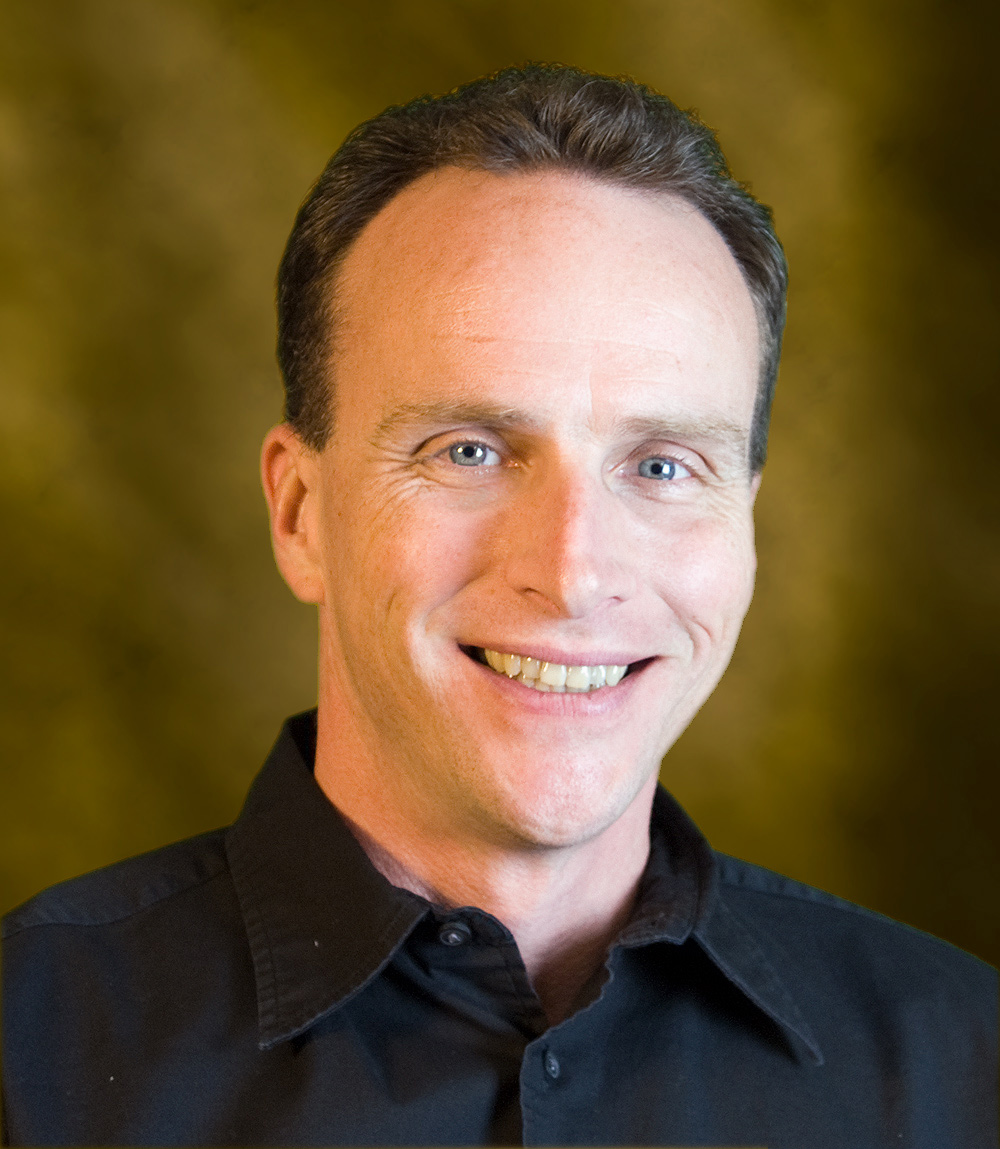
Bob Doyle - Author & CEO of Boundless Living, Inc.

For years Bob had jumped around from career to career, trying
desperately to find something that provided a solid income for him and
his family, but also tapped into his sense of passion and creativity.
After 4 years at his last corporate job, he literally felt like he was
dying and made the decision to quit his job, give up his salary and
benefits, and create a business of his own.

This proved to be quite a challenging endeavor. Bob was $70,000 in debt
and had started to receive phone calls from creditors. Further, his
various attempts at creating a business that was both fun and profitable
were simply not working. Ironically, the businesses he was trying to
create were focused on helping people to live their lives by design, and
although he could “teach” these concepts, there was clearly simply a
component he was missing, as his own life clearly showed.

It was at this point, he set a new intention for himself. Instead of
putting his attention on “solving his money problems”, he instead
focused on what he truly wanted his life to look like. He created a new
inspiring vision for himself and let go of trying to “figure everything
out”, and instead decided to follow his intution into inspired action.

The dramatic change of approach eventually led him down a path to the
answers he was seeking. As a result of what he learned, he was able to
finally create a business that he loved, and was very lucrative.

Soon, he wrote his first book, “Wealth Beyond Reason“, based on his
Internet program of the same name and built up his Internet presence of
www.BoundLessLiving.com to a 6 figure, and eventually a 7-figure income
and now he is helping others live the life of their dreams and own their
own terms, utilizing the same principles that facilitated the change in
his own life.

Here is our interview with Bob Doyle.

Abundant Health Center: Bob, hello. Thank you for taking your time to
speak with us today. A lot of people (I think) get confused by the
title of your book, and of course now it is an entire course, “Wealth
Beyond Reason” – but it’s really more than “material” or “physical”
wealth isn’t it? Would you mind explaining what it means to you and how
you came up with the idea to write this wonderful book?

Bob Doyle: Well, the book of course was based on our Internet curriculum
in the Law of Attraction, also called Wealth Beyond Reason. And
honestly, I wrote the book based on the material in the program because
I needed something physical to give to people at an upcoming speaking
event! I never really ever planned to write the book. It just showed up
as an inspired action to take, and I’ve definitely learned to follow
through when I get a “nudge” to do something like this.

One of the first things we do in the program and the book is help people
to define what “wealth” really means to them. Obviously, our natural
inclination is to associate wealth with the amount of money that we have
- but for the purposes of the work we do, we distill a different
definition of wealth which is, in essence, the ability to do what we
truly want to do, whenever we want to do it.

That may mean you have a lot of money and that financial abundance
facilitates your ability to live the life you want. But many people have
passions or callings that bring them great happiness and fulfillment,
but don’t necessarily require huge bank accounts.

In any case, it’s important for people to get clear on what they truly
do want – what really inspires them in a powerful way – so that they can
understand what “wealth” really means to them.

A.H.C: Was it during the time of writing the book that you started the
Bill Phillips “Body For Life Challenge”?

B.D.: Actually, the Body For Life Challenge came 2 years BEFORE I was
doing any of this work, but it was an key part of my journey, because it
was during this time that I learned a tremendous amount about what drove
people to successful results in ANY area of their lives.

A.H.C.: Isn’t this when you really started helping people achieve their
goals? Because at this time you created a website / forum for people to
come to and participate in their own “body revolution” at
www.BodyChangers.com correct?

B.D.: Bodychangers was the result of following my newly discovered
passion for fitness – and moreover, what were the keys to success in
taking on a physique transformation. After all many more people TRY to
change their bodies dramatically than actually succeed. Bodychangers was
a study in what the successful people did. After a while I began to see
patterns among the most successful that transcended simply the diet and
exercise program they chose.

The most successful and inspiring stories on the Bodychangers web site
came from people who had an extremely powerful “WHY” with regards to
their reasons for taking on the transformation. I saw that when people
got clear that being more physically fit was going to to help them live
the lives they truly wanted – to allow them to truly be the best and
most powerful version of themselves possible – their results far
outweighed those who took on an exercise program to simply have their
jeans fit better or something similar.

A.H.C.: So, not only were you working on your body with the Bill
Phillips Challenge, but you were also learning more about personal
development in general. How did your work with BodyChangers eventually
evolve into the work you do now with Boundless Living?

B.D.: After about 2 years of interviewing around 150 people about their
physique transformation stories, I was starting to feel myself burn out
a little. I was feeling that there were common themes among the
interviews and that even if I never did another interview, the site
would still be able to help people the way I intended it to.

At the same time, I felt called to expand what I was teaching outside of
simply the fitness area – because what I learned from all those
interviews was the importance of getting clear on what inspires you -
what you’re passionate about – and who you truly want to be. It was
during that time that the name “Boundless Living” popped into my mind,
and I knew then that I wanted to start making a difference for their
lives as a whole.

When I finally had the “ah-ha” moments in my own life as to why things
weren’t working, and as a result created the Wealth Beyond Reason
program, I knew it was time to bring my work with BodyChangers to a
close and focus my attention on my work with the Law of Attraction and
following ones passion.

A.H.C.: What are some of the books that were the biggest influencers on
you?

B.D.: The book that turned it all around for me was David Cameron
Gikandi’s “A Happy Pocketful of Money“. It’s an amazing study of how our
lives in this Universe work, and discusses the principle of “wealth
consciousness” (something I was definitely struggling with prior to
reading the book.)

I was able to gain an understanding of the power of our thoughts and
beliefs on a quantum level and that made all the difference for me.

Another book which I read YEARS prior that opened my mind to all kinds
of possibilities was Richard Bach’s “Illusions“.  In my mind that’s
must-reading for every human.

A.H.C.: Bob, you work with people from all types of different
socioeconomic backgrounds, in fact, you work with clients from different
parts of the world…what are some of the common denominators that you
find are holding people back from what they want to have (and what they
can have) in life?

B.D.: For the most part, it all boils down to the limiting beliefs we
have. These beliefs come from all sources: parents, friends, society,
television…the list goes on and on. Different cultures have their own
sets of beliefs of course, but wherever there is a belief in limitation
that is passed down to us, it creates something called “resistance” in
us as humans. This resistance is real energy that has an impact on what
we can experience in our lives. The scientific aspect of this
conversation gets a little deep, but suffice it to say that if we want
to attract anything in our lives – be it money, a healthy body, or a
great relationship – our belief system has to be in alignment with
having that or we will always run into problems realizing our goals in
these areas. This is actually what most of my work is about.

A.H.C.: What are three key things that people should know if they want
to transition out of the daily grind of a corporate job and start a
business of their own?

B.D.: First, they have to get super clear on what they want to do and
WHY they want to do it…and that reason should go beyond just “making
money.” They need to identify how, through this business, they are going
to creatively express themselves and their passions…as this is the
best way to assure they bring their most powerful and focused energy
into their work.

Secondly, they need to start recognizing what limiting beliefs they
might have lurking under the surface as it pertains to success in
whatever business they take on. Some of these beliefs may be very
obvious such as “I don’t know anything about running a business”, but
other beliefs run a lot deeper and may take a different kind of “work”
to deal with. Again, that’s what I help people do every day. It’s
absolutely essential.

Finally, they’ve got to be committed to taking constant inspired action.
This doesn’t necessarily mean they have to “work hard” (though it may
look from the outside that they ARE working hard.) It means that they
learn to follow their own intuitive nudges in terms of what action to
take when. If you’ve never done this before, it can take some practice,
but learning to trust and follow your intuition is what makes any
endeavor fun and seemingly effortless.

A.H.C.: Where can our readers find out more about you, the work that
you do, and the coaching that you offer?

B.D.:  Virtually everything I know I put into the Wealth Beyond Reason
program, which can be found at http://www.WealthBeyondReason.com, but we
also have smaller programs that address certain aspects of “living your
life by design” that can be found at http://www.BoundLessLiving.com – I
also post regular updates on Twitter, FaceBook, and YouTube.
 

A.H.C.: Is there anything else that you would like to add?

B.D.: Human beings have enormous creative potential. However, we’ve
learned far more limitation that possibility. However the limitation
we’ve learned to a great degree is an illusion that seems real because
of the impact those limiting beliefs on our ability to “attract” the
experiences in our lives that would make us feel more powerful. You can
do yourself no greater service that to take the time to decide what you
truly want your life to be, learn a bit about the energetic nature of
the Universe and your role in it, and commit to taking consistent
inspired action in the direction of your most inspired dreams.

A.H.C.: Bob, thank you for taking the time to speak with us today.

B.D.: Totally my pleasure.

Source: http://www.abundanthealthcenter.com/blog/interviewwithlawofattractionexpertbobdoylefromwealthbeyondreason

walk in clinic medical health clinics walk in clinics community health clinic emergency clinic

Federal Government Questions Legality Of Certain ASC-Service Provider Arrangements

Recently, the Office of Inspector General (OIG) of the U.S. Department of Health and Human Services issued an advisory opinion regarding two types of Proposed Arrangements between an anesthesia provider (AP) and physician-owned ambulatory surgery centers (ASCs). This came as a result of a request for an opinion from an AP who, because of competitive market pressures, was considering one of two new business relationship models. Under the AP’s current professional arrangement, the ap offers exclusive anesthesia services to ASCs, employs personnel to meet the anesthesia needs of the ASCs, and independently bills patients and third party payors, including Medicare, for professional fees. The ASCs bill the same parties for professional services plus a facility fee for materials and ancillary staff.

  • Under Proposed Arrangement A, the AP would continue to provide exclusive anesthesia services to the ASC and to bill independently. Additionally, the AP would pay a market value “management services” fee to the ASC for each non-Federally funded patient. The ASC would both collect this fee and continue to charge a facility fee to Federal and third party payors.
  • Under Proposed Arrangement B, the ASC physician-owners would set up a separate subsidiary to exclusively provide anesthesia services to their patients. The subsidiary then would hire the AP as the exclusive independent anesthesia services contractor, handle all billing with the assistance of the AP and its staff, pay the AP out of fees collected, and retain any profits.

In analyzing the legality of the two arrangements, the OIG considered two questions: 1. Does either arrangement violate the Federal anti-kickback statute, and, 2. Would any safe harbor protection apply?

Under the anti-kickback statute, it is a criminal offense to offer, pay, solicit, or receive any remuneration for referrals reimbursable by a Federal health care program. This statute seeks to ensure that referrals are based on sound medical judgment and not financial or other incentives. Regarding Proposed Arrangement A, although the AP would pay a management services fee only for non-Federal health care program patients, this does not reduce the risk that the fee might be paid by the AP to induce referrals from the ASC of all types of patients. Additionally, the arrangement allows the ASC to be paid twice for the same services, and this could unduly influence the ASC to select the AP as the exclusive provider. The OIG concluded that Proposed Arrangement A could violate the anti-kickback statute. No safe harbor protections apply.

Safe harbor protections for ASCs, employment, and personal services and management contracts were determined to not apply to Proposed Arrangement B. The Subsidiary does not qualify as a Medicare-certified ASC because it would not provide surgical services, only anesthesia services. As such, its income and the profits distributed to the ASC physician-owners would not be protected by any safe harbor provisions. Additionally, the OIG is concerned about exclusive arrangements between those who refer business (the ASC physician-owners), and those who furnish goods or services reimbursed by a Federal health care program (the AP). The AP and the ASC physician-owners both would benefit financially in Proposed Arrangement B, with the AP receiving its negotiated rate and the physician-owners receiving residual profits from the subsidiary after expenses and payment to the AP. The OIG concluded that Proposed Arrangement B would permit the physician-owners to receive compensation in the form of profits from the subsidiary from referring patients to the AP; this payment would be for services that they themselves could not provide. The more than minimal risk of fraud and abuse and the prohibited remuneration both would be in violation of the Federal anti-kickback statute.

Physicians should be aware of this development, as it may affect current and future professional relationships. A health care attorney can offer assistance in interpreting the potential impact of the OIG decision and evaluating the need to restructure business arrangements.

Source: http://www.pagingdrblog.com/2012/07/18/federal-government-questions-legality-of-certain-asc-service-provider-arrangements/

women health clinic women health clinics mental health clinic womens health clinics womens health clinic

Simplifying LASIK Basics – Part 2: What’s Involved

Welcome to the second in our Simplifying LASIK Basics series. In this edition, we’ll highlight what the procedure’s like and types of LASIK in a way that should keep it simple. Hopefully it can help you determine what types of questions to ask your doctor as part of your decision to have LASIK performed.

What’s The Procedure Like? Although there’s more to it than this, here are the basics. Big Picture: Laser technology reshapes your cornea so things look sharper and clearer. Who It’s For: Mainly for anyone who is nearsighted, farsighted or has astigmatism. What Happens: A “flap” is created in the cornea, then the flap is gently lifted and folded back, and the cornea is reshaped using laser pulses to correct focusing problems in the eye. On average, it takes approximately 5 minutes, and may take slightly longer if your vision problems are more severe.

Types Of LASIK. Essentially, there are three basic types of LASIK, each designed to do what LASIK is supposed to do – help you see better, possibly better than you ever have with less dependency on glasses or contact lenses. You may have seen types of LASIK referred to this way: Conventional LASIK, Wavefront-Optimized LASIK, and Wavefront-Guided LASIK (also called Custom LASIK).

Which Type Of LASIK Is Best? Different doctors may use different types for different reasons. At Eye Consultants of Texas, we use a system based on Custom LASIK. It brings together two highly advanced technologies for a procedure branded “iLASIK.” Dr. Labor selected this after careful evaluation, mainly because it has proven to be more efficient and successful than other LASIK technologies he has used. But also, because of what it was designed to do – give the surgeon more control in customizing the procedure to each patient’s eye to get the best results. While the technology itself is extremely important, it’s even more important that your doctor has the skill and expertise to use it! Having been the first in the U.S., Texas, or locally to perform new procedures, Dr. Labor does his homework, and trains extensively on new technologies and advancements before ever putting them to use.

Until our next Simplifying LASIK Basics blog, if you’d like to know more about LASIK at Eye Consultants of Texas, please call our office in Grapevine at 877-516-4364. We’re conveniently located to Dallas/Fort Worth.

This blog is a broad overview of LASIK surgery for general informational purposes only. In no way is it intended as actual medical advice. Always seek a medical or eye care professional for advisement based on your individual health and specific eye care needs. 

Source: http://www.eyectexas.com/blog/lasik-basics-2/

county health clinic county health clinics city health clinic walkin clinic free medical clinics

Sunday, February 3, 2013

The flu season has now started!!

Winter flu outbreak has now started – and it looks as though it may be a much worse season than last year.

Just as a couple of winters ago, children seem to be catching flu as well.

Globe Travel Health Centre has stocks of flu vaccine, and will also vaccinate the under 16s…

For further advice, contact the Globe Travel Health Centre on 01603 667323

Source: http://www.globetravelhealthcentre.com/travel-advice/the-flu-season-has-now-started.html?utm_source=rss&utm_medium=rss&utm_campaign=the-flu-season-has-now-started

hospital clinic healthcare doctors clinics

Bullying: A Physician’s Perspective

The incidence and severity of bullying have received much media attention of late. Some argue that both may be a function of a changing media landscape. What are the health risks associated with bullying? What is the role of the health professional when it comes to bullying? And what can communities do to prevent bullying or minimize its effects? Chuck Wibbelsman, MD, chief of adolescent medicine for Kaiser Permanente San Francisco and president of the American Academy of Pediatrics, addresses these and other questions with the Center for Total Health blog.

CTH Blog:

Bullying has been getting a lot more attention in the media, and it appears to be taken a lot more seriously now than in the past. As the chief of adolescent medicine for Kaiser Permanente in San Francisco, have you seen any increase in your practice in the number of adolescents coming in with concerns related to bullying?

Charles Wibbelsman:

In my own practice, I’ve seen an increase in bullying, anecdotally speaking, and that increase is reflected nationally as well. I was reading in The Journal of the American Medical Association, that 20 to 30 percent of students are involved in bullying – either as perpetrators or as victims.

We’ve had a teen clinic since 1955. When Solomon Cohen set up this clinic for adolescents ages 11 to 19, we were the only teen clinic in 1955, and we were one of the first teen clinics in the United States.

Bullying has changed over the last 20 years. It used to be that bullying would occur in the schools—students making fun of or physically assaulting other students, guys beating each other up, but now you have cyber bulling – social media, texting, Twitter, Facebook, and on-line videos. And, with cyber bullying, it’s mostly girls. Cyber bullying is twice as common among girls than boys.

CTH Blog:

Do you think bullying is becoming more common, or are people less tolerant of it now?

CW:

Bullying is more common because the factors involved in bullying are not just physical or verbal in a school setting. Again, now we have the bullying online as well. People are talking about it now. We’re seeing it in every type of media. People are more aware of it. It used to happen in the schools, and often teachers and parents weren’t aware of it. Now, people don’t look the other way. They are taking some responsibility.

CTH Blog:

The ramifications of bullying are serious. In addition to physical harm (from others or self), what are some of the health risks associated with bullying—the psychological and emotional health concerns that people may experience in response to bullying, such as anxiety, depression, headaches, or nausea?

CW:

There are serious health risks. Low self-esteem, depression, substance abuse, and suicide attempts. There are more than 250,000 attempted suicides, and 5,000 completed suicides among teens each year. The case of Rutgers University student Tyler Clementi, whose roommate filmed him being intimate with another man in a dorm room and uploaded the video, is an example of what can happen with bullying. Tyler committed suicide by jumping off the George Washington Bridge.

CTH Blog:

When you hear of tragedies such as what took place with Tyler Clementi, what is your reaction? There have been a growing number of adolescent and teen suicides that have been linked to bullying.

CW:

One of the saddest parts of my work was two years ago. A 14-year-old boy hung himself. He was one of my patients. His girlfriend broke up with him. He was popular, had lots of friends, good grades, played sports… It was horrible. It shows you how sensitive, vulnerable one is at that age. You don’t have the life experiences to deal with it.

I did a panel in San Francisco at the American Academy of Pediatrics, and there were LGBT youth talking about their own experiences being the victims of bullying. They were in their late teens, and all of them said that their worst experiences with bullying were in middle school. They all said, ‘I survived middle school.’ That’s the time when your body is changing, not everybody looks the same, there are school pressures – it’s prime time for bullying. There is decreased self-esteem. Bullying is at its height. Many young adults and adolescents don’t have the defense mechanisms to handle a lot of this.

CTH Blog:

Many kids who experience bullying suffer in silence, fearing retribution if they speak up. What are some of the warning signs adults should look for in kids?

CW:

Sometimes it’s unprotected sexual activity. I see isolation. I see cutting. When I see kids as patients, I ask, is this kid at risk for hurting himself? When I talk to adolescents about sexual orientation, maybe they’re gay or lesbian and haven’t come out yet. They’re very isolated. These are prime victims for bullying.

When we look at an adolescent, or when I’m examining a patient, I’m looking at self-esteem. How do they feel about themselves – their body? How do they relate to their body? If they have low self-esteem, it could be about low socio-economics, body weight, or sexual orientation. So, again, they may be at risk for depression, substance abuse, or suicide attempts.

We really need to talk with young adolescents in middle school, in junior high.  Kaiser Permanente’s Educational Theatre Program is designed to do just that. They put on a theater performance called Nightmare on Puberty Street that addresses, in an entertaining way, the issues and difficult topics middle school students face. It looks at things like peer pressure, self-esteem, and bullying. I’m really proud of this program.

CTH Blog:

As a physician, you may be one of the few people an adolescent can talk to. You may be in a position to establish trust and an open line of communication in ways that others may not. What is the role of the health professional when it comes to bullying? Is the topic of bullying a regular part of the doctor-patient dialogue or should it be?

CW:

As a pediatrician, my responsibility as a doctor is to ask during routine checkups, how are you doing in school? I need to find out if he or she doesn’t have any friends, or if their grades are failing. Or, if one of my patients says, for example, ‘I want to change schools,’ that is a big red flag. As a physician, I often have access to information that adolescents don’t tell other people – things about substance abuse, depression, for example. I also partner with other physicians in mental health. At Kaiser Permanente it’s seamless. We’re all under one roof.

The bible of adolescent care is H-E-A-D-S – Home, Education, Activity, Drugs, and Sex. When I see a patient, at some point, I ask the parents to step out. We discuss a whole host of concerns. Home: I ask who do you live with? Do you live with both parents? I also ask about guns. Is there a gun in their life? Because maybe grandpa has a gun in the house, and a teen may have access to a gun. Activity: Are you involved in sports? What do you do in your free time? How much TV do you watch? I ask do you smoke? Sex: I ask them about what’s going on in their life. Are you having sex? Do you want to have sex, or are you being pressured? Because there are all kinds of layers.  There could be issues concerning domestic violence. I start with the easier questions first, asking them what they like to do, and so forth.  It’s about building trust and rapport.

CTH Blog:

In your practice, you emphasize the importance of communication with parents as well.  Do you ask the parents some of these same questions?

CW:

Yes. We have a questionnaire for parents and adolescents. We ask some of the same questions and general questions as well. For example, does your child drink sodas? Is there a gun in the house? Are you concerned about any behaviors in your child? Is your child sad? Do they watch TV? What kind of things does your child like to eat?

CTH Blog:

What can communities and schools do differently to prevent bullying or minimize its effects?

CW:

Schools need to prepare teachers to be educated about bullying and intervene. Schools, principals, and students need to be aware about what’s going on with students. They need to step up to the plate, not just school’s over and everybody goes home. We need to involve the parents as well. Kids are not going to tell their parents some things.

No matter what our role in life, parent or health care provider, we need to be aware so that we can help a child or an adolescent. We have to ask the questions to be able to help.


Source: http://centerfortotalhealth.org/2012/bullying-a-physicians-perspective/

doctors clinics health center medical clinic health services

Former Opioid Use Advocate Admits He Was Wrong

Opiod Use Blog Image

A former champion of opioid use for pain management has changed his tune, and he is sending out a strong warning against misusing the treatment that he once championed. Dr. Russell Portenoy's public change of heart underscores the urgency of addressing this important health crisis: addiction to opioid derived pain medicines.

Source: http://www.spine-health.com/blog/former-opioid-use-advocate-admits-he-was-wrong

emergency clinic community health clinics family health clinic neighborhood health clinic university health clinic

Increase in mosquitos carrying dengue fever in Cuba

There has been an increase in the numbers of Aedes aegypti mosquitos in urban areas of Cuba, including Havana.

These insects can carry dengue fever, an unpleasant viral disease, (commonly named breakbone fever due to the severe joint and muscle pain involved). The authorities have established a surveillance system to monitor the situation, but travellers should nevertheless take steps to avoid being bitten by these mosquitos, which are active and biting during daylight hours.

Source: Agence France-Presse

For further advice, contact the Globe Travel Health Centre on 01603 667323

Source: http://www.globetravelhealthcentre.com/travel-advice/increase-in-mosquitos-carrying-dengue-fever-in-cuba.html?utm_source=rss&utm_medium=rss&utm_campaign=increase-in-mosquitos-carrying-dengue-fever-in-cuba

family health clinics dental health clinic walk in health clinic beach health clinic walk in health clinics

Aero-Medical Retrieval Education

Source: http://adventuredoc.net/2012/05/25/aero-medical-retrieval-education/

medical clinics free clinic medical centers free clinics symptom checker

The Coronary Artery Entrapment

Source: http://bernardlown.wordpress.com/2012/07/31/the-coronary-artery-entrapment/

rural health clinic health medical hospital clinic

Saturday, February 2, 2013

The Advantages Of Supreme Greens

Supreme Greens spokesmodel, Carmen Palumbo explains the benefits of Supreme Greens.


Source: http://www.abundanthealthcenter.com/blog/the-advantages-of-supreme-greens

walk in clinics community health clinic emergency clinic community health clinics family health clinic

Simplifying LASIK Basics – Part 4: Trusting Your Doctor

Although relatively simple, LASIK is surgery. So like any medical procedure, finding a reputable, skilled surgeon you can trust is important to your outcome. Dr. Labor, our doctors, and staff all work to earn the trust of our Dallas/Fort Worth patients by taking the time to understand their overall health, particular condition, and only provide what is truly needed. In this 4th Simplifying LASIK series blog, here are some things we would encourage our patients to consider related to the issue of trust.

How Can I Trust My Doctor? The best way to judge, of course, is face to face. Certainly, you want to learn about the doctor’s credentials and expertise beforehand. And there’s no substitute for word of mouth, so ask around. If you set an appointment, it’s not uncommon to be seen first by a staff Optometrist, and later by your surgeon. Were you given the proper time and attention? Did you feel that the doctor has your best interest at heart? In addition, did you feel like he or she was honest about recommending only what you really needed? Use your best judgment, and, as always, don’t hesitate to ask questions.

How Can I Trust The Price? The best rule of thumb is usually the old rule of thumb – you get what you pay for. At Eye Consultants of Texas, our pricing is in line with the high quality expertise and care we provide, competitive with the most reputable practices, and we quote you an accurate, realistic price up front. A word about unbelievably low, wow pricing: If the price in a LASIK ad seems too good to be true, you may want to grab your glasses and read the fine print. The price may only apply to a very small percentage of patients. Naturally, you deserve to get the most for your money. But LASIK is an investment in your precious eyesight, and, if performed properly by the right surgeon, it can pay dividends for many years to come.

Phillips Kirk Labor, MD is an internationally respected LASIK specialist who has earned the trust of numerous patients across the Dallas/Fort Worth Metroplex. If you’d like to know more about LASIK at Eye Consultants of Texas, please call our office in Grapevine at 877-516-4364.

This blog is a broad overview of LASIK surgery for general informational purposes only. In no way is it intended as actual medical advice. Safety and results are assessed and apply to each specific patient. Always seek a medical or eye care professional for advisement based on your individual health and specific eye care needs. 


Source: http://www.eyectexas.com/blog/trusting-your-doctor/

mental health clinic womens health clinics womens health clinic mental health clinics behavioral health clinic

It’s World Diabetes Day

In honor of World Diabetes Day, Kaiser Permanente’s Care Stories blog is highlighting stories of patients dealing with the disease. You can view all the stories here. The video below is about a physician who was surprised to find out she was diabetic, herself. Now she says her diagnosis is helping her be a better doctor for her patients.

Learn more about diabetes—including risk factors, warning signs, prevention and treatment—at the International Diabetes Federation website.

Source: http://centerfortotalhealth.org/2012/its-world-diabetes-day/

medical centers free clinics symptom checker walk in clinic medical health clinics

Protected: Flu Season 2013

This post is password protected. To view it please enter your password below:

Source: http://www.abundanthealthcenter.com/blog/flu-season-2013

medical clinic health services the health clinic health clinic in what is a health clinic

Interview With Wendy Schauer – Author of The 7 Steps To Amazing Health!

Here is a link to an interview that “foodie”, health advocate, and grass fed beef rancher Lisa Wilcox recently did with author Wendy Schauer.

http://nwlocalgrassfedbeef.com/interview-with-wendy-schauer-author-speaker-chiropractor-kettlebell-trainer/

Yours In Health!

G.E. Moon II

Source: http://www.abundanthealthcenter.com/blog/interview-with-wendy-schauer-author-of-the-7-steps-to-amazing-health

the health clinic health clinic in what is a health clinic clinic health health department

Friday, February 1, 2013

Protected: Flu Season 2013

This post is password protected. To view it please enter your password below:

Source: http://www.abundanthealthcenter.com/blog/flu-season-2013

health clinics in health clinics medical clinics free clinic medical centers

Top 5 Patient Benefits of iLASIK™

Since its inception, laser vision correction has been changing the lives of our patients, enhancing vision and reducing or eliminating our patients’ dependence on eyeglasses and contact lenses.  Now, our practice is proud to offer what many consider to be the most advanced LASIK system available: iLASIK™.  Not sure what this cutting-edge procedure is all about?

Here is our list of the Top 5 Patient Benefits of iLASIK:

  1. Fully-customized procedure. iLASIK is not a one-size-fits-all procedure.  Rather, using cutting-edge 3D eye mapping, iLASIK creates a one-of-a-kind image that is used to guide your LASIK procedure.  This unique “roadmap” means a fully-customized procedure in keeping with your unique anatomy and medical needs.
  2. Completely bladeless. Where some LASIK systems rely on metal blades, iLASIK creates a corneal flap using a precise laser.  This completely blade-free system is an ideal alternative for those hesitant about “going under the knife.”  What’s more, this method often results in better and faster healing following the procedure.
  3. Cool laser technology. A second laser – the one used to make the actual vision correction – can be understood as a “cool laser.”  Using pain-free, ultraviolet light, iLASIK works to reshape the cornea and achieve better vision.  What’s more, vision correction takes only seconds per eye.
  4. Iris registration. Cutting-edge iris registration technology ensures that iLASIK’s laser remains aligned, even if you move your eye.  This offers not only a more precise procedure, but very often a quicker procedure as well.
  5. Most patients achieve 20/20 vision or better. Of course, the most important benefit of iLASIK is its remarkable results.  And, while each patient’s results will vary, most iLASIK patients achieve 20/20 vision or better following the procedure.

iLASIK in Winchester

To learn more about iLASIK, contact us today and schedule a consultation. Our offices are located in Winchester, serving Virginia, West Virginia and Maryland, and you can reach us directly at (540) 722-6200.  We look forward to meeting you.

Source: http://www.seeclear.com/blog/lasik/top-5-patient-benefits-of-ilasik%e2%84%a2

womens health clinic mental health clinics behavioral health clinic are health clinics free free health clinics

New e-edition newsletter delivers Cancer Center research information quarterly

Forefront is a complimentary magazine from the Mayo Clinic Cancer Center, a National Cancer Institute-designated cancer center located in Arizona, Florida and Minnesota. The Cancer Center specializes in translational research and the effort to discover better ways to prevent, detect and treat cancer. It serves diverse patient populations across a broad geographic area and collaborates across the full spectrum of cancer research, from basic biology to treatment.

Email edition available
Forefront articles highlight Mayo Clinic’s cancer research and its translation into clinical advances. Forefront is published in print and online annually, but beginning in summer 2012 a complimentary quarterly email edition will also be available. Subscribers to the email version receive:

  • A personal message from Robert B. Diasio, M.D., Cancer Center director
  • Updates about research conducted by Cancer Center scientists and physicians
  • A regular column that features and discusses Cancer Center statistics
  • Stories about patients whose lives were impacted by Cancer Center research
  • Administrative updates on the Cancer Center’s ongoing efforts to ensure that the needs of the patient come first

Subscribe to Forefront today
Receive complimentary, quarterly emailed news and information from the Mayo Clinic Cancer Center.

Clinical trials at Mayo Clinic
Cancer

Source: http://physicianupdate.mayoclinic.org/2012/05/29/new-e-edition-newsletter-delivers-cancer-center-research-information-quarterly/

free clinic medical centers free clinics symptom checker walk in clinic

Changes are Coming to Your Health Savings Accounts

It’s the season of open enrollment for health insurance plans, and if you have an HSA (Health Spending Account – sometimes called a Health Reimbursement or Flex Spending Account), it’s time to max it out! Tax laws have changed, and this coming year, 2012, is the last year that you can place the maximum $5,000 in your HSA. Starting in 2013, the maximum allowed in any Health Savings Account will be $2,500, which means that the entire cost of laser eye surgeries such as LASIK cannot be covered by your HSA pre-tax dollars after 2012.

If you have questions about the coming changes, or if you would like to set up a consultation for LASIK or other laser vision correction procedures, please contact Grochmal Eye Center at (410) 697-4090.

Source: http://www.grochmaleye.com/blog/hsa-flex-spending-account/

hospital clinic healthcare doctors clinics

Dengue fever in Trinidad and Tobago

An outbreak of dengue fever has been reported in central Trinidad and Tobago.

This unpleasant viral illness is spread by infected mosquitos that bite during daylight hours, and there is no vaccine available at present.

Travellers are reminded to take all precautions necessary to avoid being bitten by insects, such as using mosquito nets, covering up and using efficient insect repellents.

Source: Trinidad and Tobago Guardian Online

Note: There are also outbreaks of dengue fever in El Salvador, Guatemala, Paraguay & Mexico. In Cambodia, the season is prolonged.

For further advice, contact the Globe Travel Health Centre on 01603 667323

Source: http://www.globetravelhealthcentre.com/travel-advice/dengue-fever-in-trinidad-and-tobago.html?utm_source=rss&utm_medium=rss&utm_campaign=dengue-fever-in-trinidad-and-tobago

health clinics medical clinics free clinic medical centers free clinics

So, What Is Presbyopia?

A lot of people have heard the term Presbyopia before, but not everyone knows the whole story.  While the word may sound  complicated, the condition is actually quite simple to understand.  Presbyopia is a change in our eyes’ ability to focus on close objects.  This change is a natural part of the aging process, and it usually presents itself when folks are in their 40s.

Common signs of presbyopia include:

  • Blurry vision when focusing on close-up objects
  • Trouble reading small print, especially in low light
  • Holding objects far away from the face to see them better
  • Headaches

So, why does presbyopia happen?  The lens of the eye is responsible for keeping objects in focus.  The unique flexibility of the lens allows us to focus on distant objects as well as close-up objects.   Presbyopia occurs when this soft lens begins to harden, reducing its flexibility and hindering the eye’s ability to focus on nearby objects.

Thankfully, there are many things we can do about it.  Read on to find out a few ways we treat presbyopia today.

Presbyopia Treatments

For some patients, eyeglasses or contact lenses may be enough to combat their presbyopia symptoms.  In more serious cases, or for those wishing to avoid corrective lenses, modern ophthalmology offers a few  solutions.

Here are two of the most common ways we treat presbyopia today:

  • CK Surgery: CK Surgery for Presbyopia, also known as Conductive Keratoplasty, is a non-invasive, non-laser treatment.  Instead of a scalpel, a CK procedure uses radio-frequency energy to reshape the cornea and change the way the eye focuses light.
  • Presbyopic IOL: A Presbyopic IOL is a replacement lens aimed at total vision correction.  These IOLs, such as the ReSTOR® Multifocal Lens, are implanted through a safe procedure similar to that of a cataract patient.  Furthermore, presbyopic IOLs have the added benefit of preventing cataracts from developing in the future, as the natural lens is completely replaced.

Ophthalmologist in Winchester

To learn more about presbyopia treatment or to schedule an appointment at our Winchester Ophthalmology Offices, we encourage you to contact us today.  We can be reached at (540) 722-6200 and look forward to meeting you soon.

Source: http://www.seeclear.com/blog/presbyopia/so-what-is-presbyopia

mental health clinics behavioral health clinic are health clinics free free health clinics behavioral health clinics